Managing 500GB Mass Spectrometry Files Locally with DataOlllo
6/12/2026
The Hidden Challenge of Large Experimental Datasets
As a life sciences researcher, I know the struggle of managing massive datasets firsthand. Just last week, I was working with a series of mass spectrometry exports that totaled over 500GB. Each file took nearly an hour to transfer, and that was just to move them from the lab equipment to my local workstation. When you consider that a single flow cytometry experiment can generate files with millions of rows and next-gen sequencing counts can easily reach terabyte-scale, it's clear that we're dealing with a significant data management challenge.
The Current State of Data Handling in Life Sciences
The consequences of inefficient data handling are far-reaching. Many researchers are forced to rely on cloud platforms to store and process their data, which introduces several problems. For one, uploading large datasets to the cloud can be incredibly time-consuming. I once spent three days trying to upload a 1TB sequencing dataset to a cloud service, only to have the process fail halfway through due to a network glitch. This delay is not just an inconvenience; it can severely impact the pace of research and delay critical discoveries.
Moreover, using cloud platforms for proprietary research data raises significant security concerns. With the rise of data breaches and stringent regulations like HIPAA and GDPR, researchers are under increasing pressure to keep their data secure. Uploading sensitive information to third-party servers can expose it to potential threats and legal complications. Additionally, the cost of cloud storage can quickly add up, especially when dealing with the vast amounts of data typical in life sciences research.
A Step-by-Step Guide to Local Data Management
So, how do we manage these massive datasets without relying on the cloud? Here's the workflow that I've found to be effective:
-
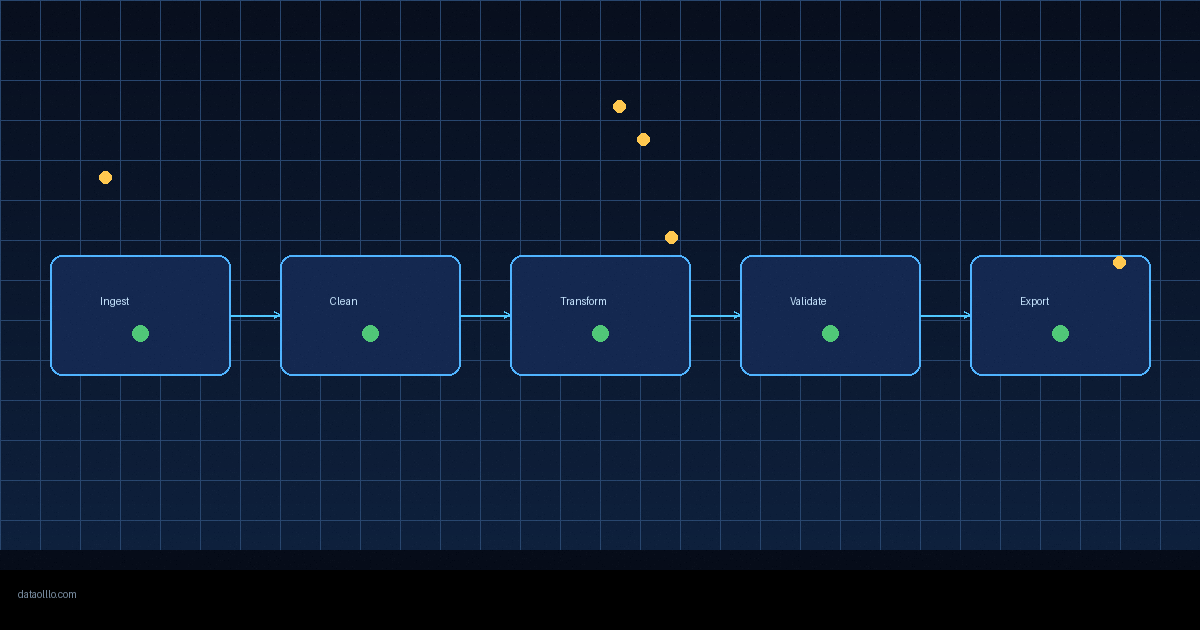
Initial Data Capture: When I collect data from lab equipment, I ensure that it's saved directly to a high-capacity local storage device. This could be an external hard drive or a network-attached storage (NAS) system. For instance, my mass spectrometry exports are saved to a 4TB external drive, which I can easily transport between my workstation and the lab.
-
Data Organization: Once the data is on my local storage, I organize it using a consistent file naming and folder structure. This makes it easier to locate specific files and datasets later on. I use a hierarchical system based on date, experiment type, and sample ID.
-
Local Processing: For data analysis, I use DataOlllo, a local CSV analysis tool. This tool allows me to process and analyze my data without ever needing to upload it to the cloud. I can perform complex queries, generate reports, and visualize my results all from my local machine. For example, I recently used DataOlllo to analyze a 50GB flow cytometry dataset, identifying key trends and patterns in just a few hours.
-
Backup and Archiving: After processing, I back up my data to a separate local storage device and archive it for future reference. This ensures that I have a secure, redundant copy of my data in case of any hardware failures.
The Importance of Keeping Data Local
Keeping data local is crucial for several reasons. First and foremost, it helps maintain data security and compliance with regulations like HIPAA and GDPR. By keeping sensitive information off the cloud, I can better protect it from potential breaches and ensure that I'm adhering to legal requirements.
Additionally, local data processing reduces latency and improves efficiency. When I analyze data locally, I don't have to worry about internet connectivity issues or slow upload speeds. This allows me to work more quickly and efficiently, which is essential in the fast-paced world of research.
Finally, local data management is more cost-effective. While cloud storage can be expensive, especially for large datasets, local storage solutions offer a more affordable alternative. By investing in high-capacity hard drives and NAS systems, I can store and manage my data without breaking the bank.
Ready to Take Control of Your Data?
If you're tired of the headaches and delays associated with cloud-based data management, it's time to try DataOlllo. With its powerful local processing capabilities, you can analyze your experimental datasets quickly, securely, and efficiently. Download DataOlllo today at dataolllo.com/download and experience the difference of local data management for yourself.